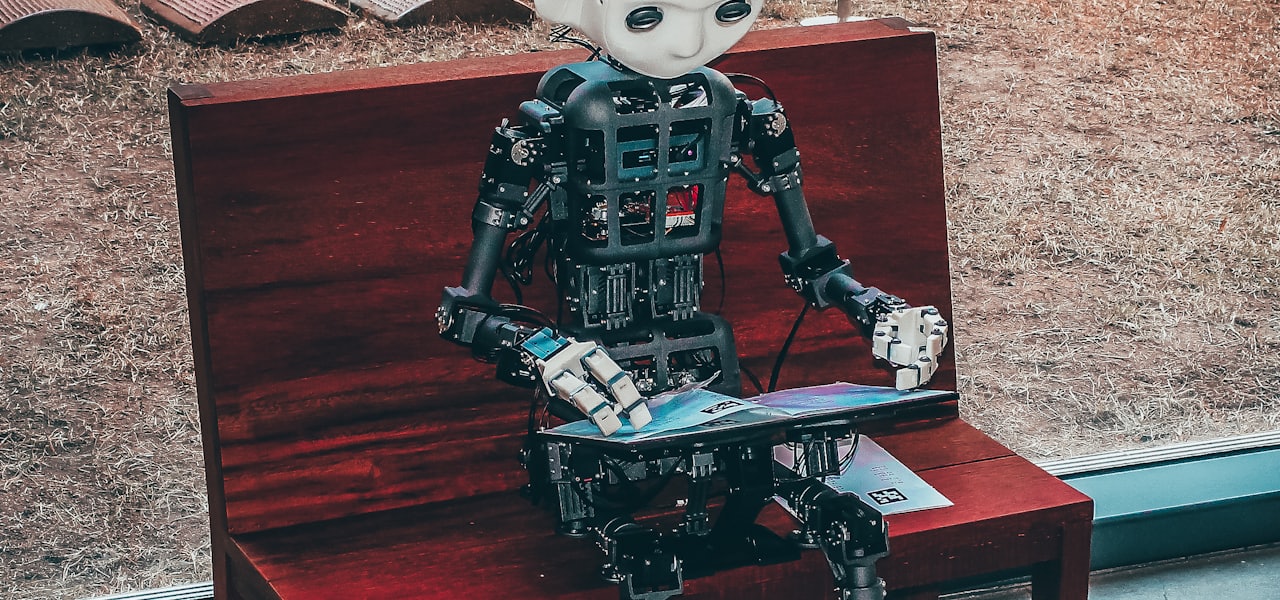
A technology company, or tech company, is a company that focuses primarily on the manufacturing, support, research and development of—most commonly computing, telecommunication and consumer electronics–based—technology-intensive products and services, which include businesses relating to digital electronics, software, optics, new energy, and Internet-related services such as cloud storage and e-commerce services. Big Tech refers to the 6 largest companies, both in the United States and globally, symbolized by the metonym 'Silicon Valley', where 4 of them are based. == Details == According to Fortune, as of 2020, the ten largest technology companies by revenue are: Apple Inc., Samsung, Foxconn, Alphabet Inc., Microsoft, Huawei, Dell Technologies, Hitachi, IBM, and Sony. Amazon has higher revenue than Apple, but is classified by Fortune in the retail sector. The most profitable listed in 2020 are Apple Inc., Microsoft, Alphabet Inc., Intel, Meta Platforms, Samsung, and Tencent. Apple Inc., Alphabet Inc. (owner of Google), Meta Platforms (owner of Facebook), Microsoft, and Amazon.com, Inc. are often referred to as the Big Five multinational technology companies based in the United States. These five technology companies dominate major functions, e-commerce channels, and information of the entire Internet ecosystem. As of 2017, the Big Five had a combined valuation of over $3.3 trillion and make up more than 40 percent of the value of the Nasdaq-100 index. Many large tech companies have a reputation for innovation, spending large sums of money annually on research and development. According to PwC's 2017 Global Innovation 1000 ranking, tech companies made up nine of the 20 most innovative companies in the world, with the top R&D spender (as measured by expenditure) being Amazon, followed by Alphabet Inc., and then Intel. As a result of numerous influential tech companies and tech startups opening offices in proximity to one another, a number of technology districts have developed in various areas across the globe. These include: Silicon Valley in the San Francisco Bay Area, Silicon Wadi in Israel, Silicon Docks in Dublin, Silicon Hills in Austin, Tech City in London; Digital Media City in Seoul, Zhongguancun in Beijing, Cyberjaya in Malaysia and Cyberabad in Hyderabad, India. As of 2026, Europe has six of the world's 100 most valuable tech companies, compared with 56 in the United States and 16 in China.
Avid Symphony
Avid Symphony is non-linear editing software aimed at professionals in the film and television industry. It is available for Microsoft Windows PCs and Apple Macintosh platforms. Symphony is Avid's high end SD/HD finishing platform for long form work, such as documentary and episodic TV. Its interface is based on the same look and feature set as the Media Composer and Xpress systems, but contains the highest level of features and resolution including secondary color correction, uncompressed HD, and higher real-time performance. == Release history == Symphony is the software component of a tightly integrated package that includes specific hardware audio/video interfaces, storage, and the computer, also sold by Avid. Its release history is therefore tightly related to the release of new Avid interface hardware: Symphony was introduced to the market in 1998. It was based on Avid's Meridien hardware, supporting SD only, and was available first only for the PC and later for the Macintosh platforms. Its last release was 5.0.5 which supported Windows 2000 and Mac OS X v10.2. The next major upgrade was Symphony Nitris in 2005, with a redesigned software and integration with the Nitris DNA hardware (PCI-X). It supported 8 bit and 10 bit SD and HD resolutions in both compressed and uncompressed forms, the MXF format and DNxHD codec, and ran only on Windows PC platforms. Symphony Nitris DX, released in 2008, added support for a range of HD codecs, including HDV, XDCAM-HD, DVCPRO HD, and AVC-I, and brought back Mac OS support for OS X 10.5, as well as Windows Vista. Since the introduction of Symphony 6, it can be used in software-only mode (where a Nitris or Nitris DX BOB used to be required), and at the same time, like Media Composer, Symphony was opened up with "Open I/O", allowing users to have Symphony use their third party hardware from companies like AJA, Matrox, BlueFish, Blackmagic Design and MOTU. The last remaining features that differentiate it from Media Composer are Advanced Color Correction (channels, secondary color correction,), Relational Color Correction (corrections based on common clip name, tape name, program track) and Universal HD Mastering (only with Nitris DX hardware). The latter allows cross-conversions of 23.976p or 24p projects sequences to most any other format during Digital Cut. In 2013, Avid announced it would no longer offer Symphony a standalone product. Starting version 7, Symphony will be sold as an option to Media Composer. This optional package (sold at a premium) will contain all the traditional Symphony-only features to any Media Composer install. == Use in movies == The Celibacy, Director: Horacio Bocaranda Avid Media Composer 6 and Avid Symphony 6 Nitris DX American Hardcore, Director: Paul Rachman Avid Xpress Pro and Symphony Summercamp!, Director: Spike Lee Avid Xpress Pro and Symphony When the Levees Broke Avid Media Composer and Symphony Nitris Superman Returns Edited with Mac-based Film Composer XL, but HD screenings prepped with Symphony
Blinding (cryptography)
In cryptography, blinding first became known in the context of blind signatures, where the message author blinds the message with a random blinding factor, the signer then signs it and the message author "unblinds" it; signer and message author are different parties. Since the late 1990s, blinding mostly refers to countermeasures against side-channel attacks on encryption devices, where the random blinding and the "unblinding" happen on the encryption devices. The techniques used for blinding signatures were adapted to prevent attackers from knowing the input to the modular exponentiation function for Diffie-Hellman or RSA. Blinding must be applied with care, for example Rabin–Williams signatures. If blinding is applied to the formatted message but the random value does not honor Jacobi requirements on p and q, then it could lead to private key recovery. A demonstration of the recovery can be seen in CVE-2015-2141 discovered by Evgeny Sidorov. Side-channel attacks allow an adversary to recover information about the input to a cryptographic operation within an asymmetric encryption scheme, by measuring something other than the algorithm's result, e.g., power consumption, computation time, or radio-frequency emanations by a device. Typically these attacks depend on the attacker knowing the characteristics of the algorithm, as well as (some) inputs. In this setting, blinding serves to alter the algorithm's input into some unpredictable state. Depending on the characteristics of the blinding function, this can prevent some or all leakage of useful information. Note that security depends also on the resistance of the blinding functions themselves to side-channel attacks. == Examples == In RSA blinding involves computing the blinding operation E(x) = (xr)e mod N, where r is a random integer between 1 and N and relatively prime to N (i.e. gcd(r, N) = 1), x is the plaintext, e is the public RSA exponent and N is the RSA modulus. As usual, the decryption function f(z) = zd mod N is applied thus giving f(E(x)) = (xr)ed mod N = xr mod N. Finally it is unblinded using the function D(z) = zr−1 mod N. Multiplying xr mod N by r−1 mod N yields x, as desired. When decrypting in this manner, an adversary who is able to measure time taken by this operation would not be able to make use of this information (by applying timing attacks RSA is known to be vulnerable to) as they does not know the constant r and hence has no knowledge of the real input fed to the RSA primitives. Blinding in GPG 1.x
Data independence
Data independence is the type of data transparency that matters for a centralized DBMS. It refers to the immunity of user applications to changes made in the definition and organization of data. Application programs should not, ideally, be exposed to details of data representation and storage. The DBMS provides an abstract view of the data that hides such details. There are two types of data independence: physical and logical data independence. The data independence and operation independence together gives the feature of data abstraction. There are two levels of data independence. == Logical data independence == The logical structure of the data is known as the 'schema definition'. In general, if a user application operates on a subset of the attributes of a relation, it should not be affected later when new attributes are added to the same relation. Logical data independence indicates that the conceptual schema can be changed without affecting the existing schemas. == Physical data independence == The physical structure of the data is referred to as "physical data description". Physical data independence deals with hiding the details of the storage structure from user applications. The application should not be involved with these issues since, conceptually, there is no difference in the operations carried out against the data. There are three types of data independence: Logical data independence: The ability to change the logical (conceptual) schema without changing the External schema (User View) is called logical data independence. For example, the addition or removal of new entities, attributes, or relationships to the conceptual schema or having to rewrite existing application programs. Physical data independence: The ability to change the physical schema without changing the logical schema is called physical data independence. For example, a change to the internal schema, such as using different file organization or storage structures, storage devices, or indexing strategy, should be possible without having to change the conceptual or external schemas. View level data independence: always independent no effect, because there doesn't exist any other level above view level. == Data independence == Data independence can be explained as follows: Each higher level of the data architecture is immune to changes of the next lower level of the architecture. The logical scheme stays unchanged even though the storage space or type of some data is changed for reasons of optimization or reorganization. In this, external schema does not change. In this, internal schema changes may be required due to some physical schema were reorganized here. Physical data independence is present in most databases and file environment in which hardware storage of encoding, exact location of data on disk, merging of records, so on this are hidden from user. == Data independence types == The ability to modify schema definition in one level without affecting schema of that definition in the next higher level is called data independence. There are two levels of data independence, they are Physical data independence and Logical data independence. Physical data independence is the ability to modify the physical schema without causing application programs to be rewritten. Modifications at the physical level are occasionally necessary to improve performance. It means we change the physical storage/level without affecting the conceptual or external view of the data. The new changes are absorbed by mapping techniques. Logical data independence is the ability to modify the logical schema without causing application programs to be rewritten. Modifications at the logical level are necessary whenever the logical structure of the database is altered (for example, when money-market accounts are added to banking system). Logical Data independence means if we add some new columns or remove some columns from table then the user view and programs should not change. For example: consider two users A & B. Both are selecting the fields "EmployeeNumber" and "EmployeeName". If user B adds a new column (e.g. salary) to his table, it will not affect the external view for user A, though the internal schema of the database has been changed for both users A & B. Logical data independence is more difficult to achieve than physical data independence, since application programs are heavily dependent on the logical structure of the data that they access.
Data verification
Data verification is a process in which different types of data are checked for accuracy and inconsistencies after data migration is done. In some domains it is referred to Source Data Verification (SDV), such as in clinical trials. Data verification helps to determine whether data was accurately translated when data is transferred from one source to another, is complete, and supports processes in the new system. During verification, there may be a need for a parallel run of both systems to identify areas of disparity and forestall erroneous data loss. Methods for data verification include double data entry, proofreading and automated verification of data. Proofreading data involves someone checking the data entered against the original document. This is also time-consuming and costly. Automated verification of data can be achieved using one way hashes locally or through use of a SaaS based service such as Q by SoLVBL to provide immutable seals to allow verification of the original data.
Autonomous things
Autonomous things, abbreviated AuT, or the Internet of autonomous things, abbreviated as IoAT, is an emerging term for the technological developments that are expected to bring computers into the physical environment as autonomous entities without human direction, freely moving and interacting with humans and other objects. Self-navigating drones are the first AuT technology in (limited) deployment. It is expected that the first mass-deployment of AuT technologies will be the autonomous car, generally expected to be available around 2020. Other currently expected AuT technologies include home robotics (e.g., machines that provide care for the elderly, infirm or young), and military robots (air, land or sea autonomous machines with information-collection or target-attack capabilities). AuT technologies share many common traits, which justify the common notation. They are all based on recent breakthroughs in the domains of (deep) machine learning and artificial intelligence. They all require extensive and prompt regulatory developments to specify the requirements from them and to license and manage their deployment (see the further reading below). And they all require unprecedented levels of safety (e.g., automobile safety) and security, to overcome concerns about the potential negative impact of the new technology. As an example, the autonomous car both addresses the main existing safety issues and creates new issues. It is expected to be much safer than existing vehicles, by eliminating the single most dangerous element – the driver. The US's National Highway Traffic Safety Administration estimates 94 percent of US accidents were the result of human error and poor decision-making, including speeding and impaired driving, and the Center for Internet and Society at Stanford Law School claims that "Some ninety percent of motor vehicle crashes are caused at least in part by human error". So while safety standards like the ISO 26262 specify the required safety, there is still a burden on the industry to demonstrate acceptable safety. While car accidents claim every year 35,000 lives in the US, and 1.25 million worldwide, some believe that even "a car that's 10 times as safe, which means 3,500 people die on the roads each year [in the US alone]" would not be accepted by the public. The acceptable level may be closer to the current figures on aviation accidents and incidents, with under a thousand worldwide deaths in most years – three orders of magnitude lower than cars. This underscores the unprecedented nature of the safety requirements that will need to be met for cars, with similar levels of safety expected for other Autonomous Things.
Protecting Kids From Social Media Act
Protecting Kids on Social Media Act or HB 1891 is an American law that was introduced by William Lamberth of Sumner County, Tennessee and was signed into law by Tennessee's governor on May 2, 2024. The bill requires social media websites such as X, YouTube, TikTok, Facebook and others to verify the age of users and if those users are under 18, they must have parental consent. == Progress == The law passed the Tennessee State Legislature with little opposition: the bill had only two no votes in the House from Aftyn Behn and Vincent B. Dixie, and it had zero no votes in the Senate. == Bill summary == Every social media company must verify the age of new users after the law takes effect, and if the user had created an account before the law took effect, they must verify the age of the person attempting to access the account within 14 days. If the new user or the user who originally owned an account is under 18 years of age, they must get parental consent and the third party or social media company must not retain the data from the age verification process or obtaining parental consent. Parents who are account holders of those under 18 can view the privacy settings, set daily time restrictions, and implement breaks during which the minor cannot access the account. The law is enforced by the Attorney General of Tennessee and went into effect on January 1, 2025. == Lawsuit == On October 3, 2024, the trade association NetChoice filed a lawsuit against Tennessee Attorney General Jonathan Skrmetti in the Middle District Court of Tennessee, claiming that the law violates the First Amendment. The Judge for the case is William L. Campbell Jr. An initial case management conference was originally scheduled for December 4, 2024, however it was delayed because of the Supreme Court case United States v. Skrmetti, recommending that the conference be delayed after January 20, 2025. On February 14, 2025, Judge Eli Richardson denied NetChoice's motion for a temporary restraining order because it would disrupt the status quo of the case.